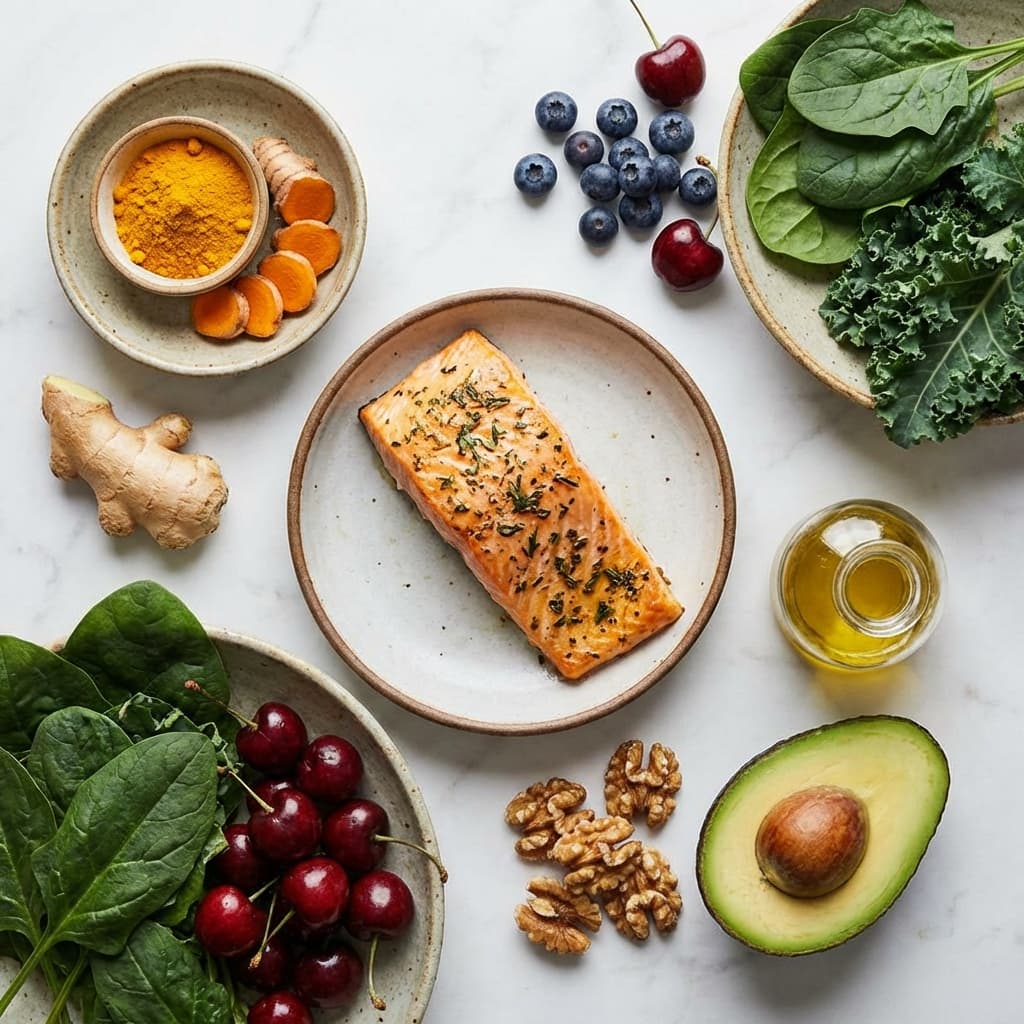
Anti-Inflammatory Foods for Period Cramps
Fight cramps naturally with these powerful anti-inflammatory foods that reduce pain, ease bloating, and help you feel better during your period.
Anti-Inflammatory Foods for Period Cramps
Period cramps happen when your uterus contracts to shed its lining, releasing hormone-like compounds called prostaglandins. The more prostaglandins you have, the more intense your cramps.
Here's the good news: certain foods have powerful anti-inflammatory properties that can actually reduce prostaglandin production and ease your cramps naturally. Think of it as fighting inflammation from the inside out.
How Inflammation Causes Period Cramps
Before we dive into the foods, let's understand what's happening in your body:
- Prostaglandins are released to help your uterus contract and shed its lining
- High prostaglandin levels cause stronger, more painful contractions
- Inflammation amplifies the pain signals your body sends
- Anti-inflammatory foods can reduce prostaglandin production and calm inflammation
The goal? Eat foods that lower inflammation and reduce those pain-causing prostaglandins.
Top Anti-Inflammatory Foods for Period Cramps
1. Fatty Fish (Salmon, Mackerel, Sardines)
Why it works: Fatty fish are loaded with omega-3 fatty acids, particularly EPA and DHA. These omega-3s directly compete with omega-6 fatty acids (which promote inflammation) and have been shown in studies to reduce period pain as effectively as ibuprofen.
The science: A study found that women who took omega-3 supplements experienced significantly less menstrual pain than those who didn't.
How to eat it:
- Grilled salmon with roasted vegetables
- Sardines on whole-grain crackers
- Baked mackerel with herbs and lemon
- Add canned salmon to salads
Aim for: 2-3 servings per week, especially in the week before and during your period.
2. Turmeric
Why it works: Turmeric contains curcumin, one of the most potent natural anti-inflammatories known. Curcumin blocks inflammatory enzymes and reduces prostaglandin production.
The research: Studies show curcumin can reduce the severity of PMS symptoms, including cramps and mood changes.
How to use it:
- Golden milk (turmeric latte with milk and honey)
- Add to smoothies with a pinch of black pepper (enhances absorption)
- Season soups, curries, and stir-fries
- Turmeric tea with ginger and lemon
Pro tip: Always pair turmeric with black pepper—piperine in black pepper increases curcumin absorption by up to 2,000%.
3. Ginger
Why it works: Ginger has been used for centuries to treat pain and nausea. It works by inhibiting prostaglandin synthesis and blocking inflammatory pathways in the body.
The evidence: Research shows ginger is as effective as ibuprofen and mefenamic acid for reducing menstrual pain. One study found that taking 250mg of ginger 4 times a day during the first 3 days of your period significantly reduced pain.
How to use it:
- Fresh ginger tea (steep sliced ginger in hot water)
- Add grated ginger to stir-fries and soups
- Blend into smoothies
- Ginger shots or ginger candies
4. Leafy Greens (Spinach, Kale, Swiss Chard)
Why they work: Dark leafy greens are rich in magnesium, which relaxes muscles and reduces cramping. They're also high in vitamin K, which helps regulate blood flow, and contain anti-inflammatory compounds.
Magnesium matters: Low magnesium levels are linked to more severe menstrual cramps. Leafy greens are one of the best food sources.
How to eat them:
- Sautéed spinach with garlic and olive oil
- Kale smoothies with banana and berries
- Swiss chard in soups and stews
- Mixed green salads with olive oil dressing
5. Berries (Blueberries, Strawberries, Cherries)
Why they work: Berries are packed with antioxidants called anthocyanins, which give them their deep colors and fight inflammation at the cellular level.
Tart cherries are special: They contain natural compounds that work similarly to NSAIDs (like ibuprofen) and have been shown to reduce muscle pain and inflammation.
How to eat them:
- Fresh berries as a snack
- Add to yogurt or oatmeal
- Blend into smoothies
- Tart cherry juice (unsweetened)
6. Walnuts & Flaxseeds
Why they work: These are the best plant-based sources of omega-3 fatty acids (ALA). While not as potent as fish-based omega-3s, they still provide significant anti-inflammatory benefits.
Flaxseeds bonus: They also contain lignans, which can help balance estrogen levels and reduce PMS symptoms.
How to eat them:
- Add ground flaxseed to smoothies or oatmeal
- Snack on a handful of walnuts
- Sprinkle on salads
- Use walnut butter on toast
Note: Ground flaxseed is better absorbed than whole seeds.
7. Extra Virgin Olive Oil
Why it works: Olive oil contains oleocanthal, a compound that works like ibuprofen to reduce inflammation. It also has powerful antioxidants that protect cells from inflammatory damage.
How to use it:
- Drizzle on salads
- Use for low-heat cooking
- Add to hummus or dips
- Drizzle on finished dishes
Choose wisely: Extra virgin olive oil has the highest anti-inflammatory compounds. Look for cold-pressed, high-quality options.
8. Dark Chocolate (70%+ Cacao)
Why it works: Dark chocolate is rich in magnesium (muscle relaxant) and contains flavonoids with anti-inflammatory properties. It also triggers the release of endorphins, your body's natural painkillers.
The right kind: Choose chocolate with at least 70% cacao. Milk chocolate and candy bars don't have the same benefits.
How much: A few squares (about 1 oz) is enough to get the benefits without overdoing sugar.
9. Pineapple
Why it works: Pineapple contains bromelain, an enzyme with powerful anti-inflammatory effects. Bromelain has been studied for its ability to reduce pain and swelling.
Fresh is best: Bromelain is most concentrated in fresh pineapple, especially near the core.
How to eat it:
- Fresh pineapple chunks
- Blend into smoothies
- Add to fruit salads
- Pineapple in stir-fries (adds sweetness and enzymes)
10. Green Tea
Why it works: Green tea contains EGCG, a catechin with potent anti-inflammatory and antioxidant effects. It also provides gentle, sustained energy without the jitters of coffee.
Bonus: Green tea has less caffeine than coffee, so it won't constrict blood vessels and worsen cramps like high-caffeine drinks can.
How to drink it:
- 2-3 cups per day
- Brew at lower temperatures to avoid bitterness
- Add a squeeze of lemon for extra vitamin C
Building an Anti-Inflammatory Meal Plan
Here's how to put it all together:
Sample Anti-Inflammatory Day
Breakfast:
- Oatmeal with ground flaxseed, blueberries, and a drizzle of honey
- Green tea
Lunch:
- Large spinach salad with grilled salmon, walnuts, and olive oil dressing
- Fresh pineapple
Snack:
- Greek yogurt with berries and a few squares of dark chocolate
Dinner:
- Turmeric-ginger chicken stir-fry with kale
- Brown rice
- Chamomile tea
When to Start Eating Anti-Inflammatory Foods
For best results, start eating anti-inflammatory foods before your period begins:
- 1 week before: Increase omega-3s and reduce inflammatory foods
- During your period: Focus heavily on anti-inflammatory choices
- Throughout your cycle: Make these foods a regular part of your diet for ongoing benefits
Foods That Increase Inflammation (Avoid These)
While you're loading up on anti-inflammatory foods, try to limit:
- Refined sugar and processed foods
- Fried foods and trans fats
- Excess red meat
- Alcohol
- High-sodium processed snacks
The Bottom Line
You don't have to suffer through every period. By choosing anti-inflammatory foods rich in omega-3s, antioxidants, and magnesium, you can naturally reduce cramps and feel better.
The best part? These foods are delicious and good for your overall health—not just your period. Start incorporating them into your diet now, and your future self will thank you.
Track your cycle and get personalized nutrition tips with Gusta.
Want personalized nutrition for your cycle?
Download Gusta to get daily food recommendations based on your unique cycle.
Download Gusta Free